Loss-Versus-Rebalancing (LVR) and Impermanent Loss Mitigation in Next-Gen AMMs
Mathematical breakdown of LVR: why traditional liquidity providers lose billions to high-frequency arbitrageurs and how dynamic fee curves and auction hooks solve structural AMM leakage.

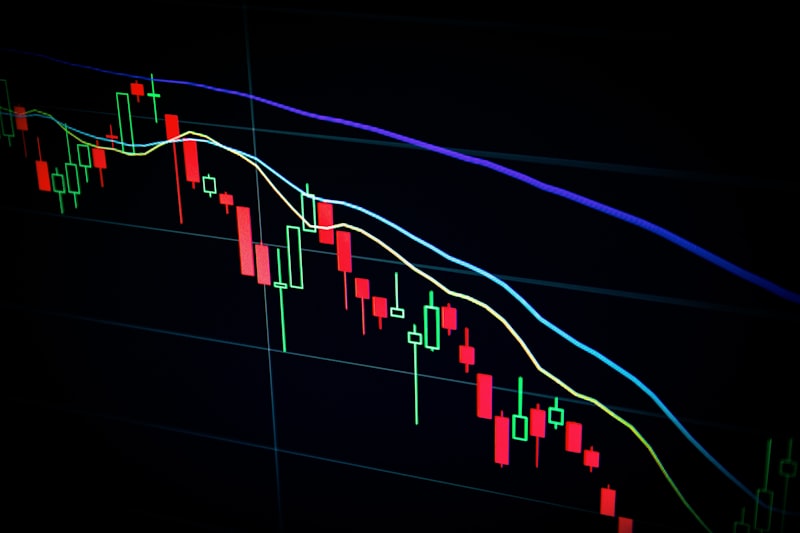
Loss-Versus-Rebalancing (LVR) has superseded standard impermanent loss as the definitive quantitative metric for automated market maker inefficiency. Academic research proves that liquidity providers leak over $500 million annually to toxic high-frequency arbitrage flow whenever external market prices move before on-chain pools update. Next-generation AMMs utilize auction-based block routing and dynamic volatility fees to recapture this value for liquidity providers.
Deconstructing Impermanent Loss vs. Loss-Versus-Rebalancing
For years, liquidity providers (LPs) in constant product automated market makers (CPMMs) like Uniswap v2 evaluated their performance using impermanent loss—the difference in portfolio value between depositing tokens in a pool versus holding them in a wallet. However, impermanent loss is path-independent and assumes price changes can reverse without consequence.
Why LVR Captures Unhedged Arbitrage Extraction
In a seminal academic paper by Milionis, Moallemi, Roughgarden, and Timmer, researchers proved that automated market makers suffer an unhedged cost called Loss-Versus-Rebalancing (LVR). Unlike impermanent loss, LVR is strictly path-dependent and grows continuously with market price volatility, representing structural value transferred directly from passive LPs to high-frequency arbitrageurs.
"LVR is not an accounting artifact; it is an economic transfer from passive retail liquidity providers to latency-advantaged algorithmic arbitrageurs."
Whenever prices change on high-speed centralized exchanges like Binance, arbitrage bots immediately execute on-chain trades against outdated AMM prices before liquidity providers can update quotes.
The Mechanics of Toxic Flow and MEV Exploitation
In financial market microstructure, order flow is categorized into uninformed retail volume and informed institutional arbitrage flow.
How Arbitrage Bots Exploit On-Chain Block Latency
Because public blockchains process transactions in discrete blocks (e.g., every 12 seconds on Ethereum), on-chain AMM prices lag continuous centralized order books. Searcher bots utilize maximal extractable value (MEV) priority gas auctions to guarantee their arbitrage trades are placed at the very top of each new block, draining stale liquidity from passive providers.
Passive liquidity providers earn fees from retail traders but consistently lose money on these informed, toxic arbitrage sweeps.
Next-Generation Architectural Solutions: Dynamic Hooks and MEV-Share
DeFi protocol architects are deploying novel mechanisms designed specifically to neutralize LVR and protect LP capital.
Volatility-Adaptive Fee Curves and Batch Auctions
Protocols are implementing dynamic fee hooks that widen bid-ask spreads during periods of elevated off-chain volatility, forcing arbitrageurs to pay higher fees to execute stale-price trades. Other designs, such as CoW Protocol and Uniswap v4 custom auction hooks, auction the right to execute the first trade of a block to the highest bidder, returning arbitrage profits directly to pool liquidity providers.
These algorithmic mechanisms restore sustainable profitability for decentralized liquidity providers, establishing a balanced foundation for DeFi trading.
| Microstructure Metric | Impermanent Loss (IL) Metric | Loss-Versus-Rebalancing (LVR) Metric | Next-Gen LVR Mitigation Mechanism |
|---|---|---|---|
| Mathematical Nature | Path-independent (only compares start and end prices) | Strictly path-dependent (accumulates with continuous volatility) | Dynamic fee curves adjusting to implied volatility |
| Beneficiary of Leakage | No direct beneficiary (portfolio divergence calculation) | High-frequency arbitrageurs and block builders (MEV searchers) | Recaptured for passive LPs via block-top auctions |
| Hedgeability | Cannot be perfectly hedged dynamically | Can be mathematically hedged with delta-neutral positions | Automated MEV-Share rebates credited back to pool reserves |
| Impact on LPs | Reverses if token prices return to initial entry ratios | Permanent economic loss that never reverses with price | Guarantees positive net LP return across volatile periods |
Frequently Asked Questions
What is Loss-Versus-Rebalancing (LVR)?
LVR is an economic metric that measures the structural financial loss liquidity providers suffer when arbitrageurs trade against outdated AMM prices, quantifying the value leaked from passive LPs to fast arbitrage bots.
How is LVR different from Impermanent Loss?
Impermanent loss only compares portfolio values at two points in time and can reverse if prices return to original levels, whereas LVR is a permanent loss that continuously accumulates whenever market prices fluctuate.
What is toxic flow in decentralized exchanges?
Toxic flow refers to trades executed by informed arbitrageurs who exploit latency delays between off-chain and on-chain prices, extracting profits at the expense of passive liquidity providers.
How do Uniswap v4 hooks help reduce LVR?
Hooks can dynamically raise swap fees during high volatility or auction off the right to execute block-opening trades, ensuring arbitrage profits are returned to pool liquidity providers instead of lost to MEV bots.
This market dispatch is published strictly for informational, educational, and journalistic research purposes by CryptoNexa Hub under the editorial direction of Abdul Mateen. Nothing contained herein constitutes investment, tax, legal, or financial advice. CryptoNexa Hub and its editorial contributors hold no liability for financial decisions or trades executed based on this on-chain telemetry. Cryptocurrencies are volatile; consult an accredited financial professional prior to allocating capital.